Why Strategy's Perpetual Preferred Stocks (STRC) are Gaining Attention
In the first two months of 2026, the financial markets witnessed a notable movement: $100 billion poured into fixed-income ETFs, marking the highest inflow for this period in 20 years. Driven by growing uncertainties surrounding the profitability of AI technology and geopolitical tensions like the US-Iran conflict, investors are aggressively seeking the safety of assets that generate stable, monthly returns.
However, the quest for high yield is exposing a critical vulnerability in traditional finance, prompting a shift toward a new asset class known as "Digital Credit."
The Hidden Risks of the $2 Trillion Private Credit Market
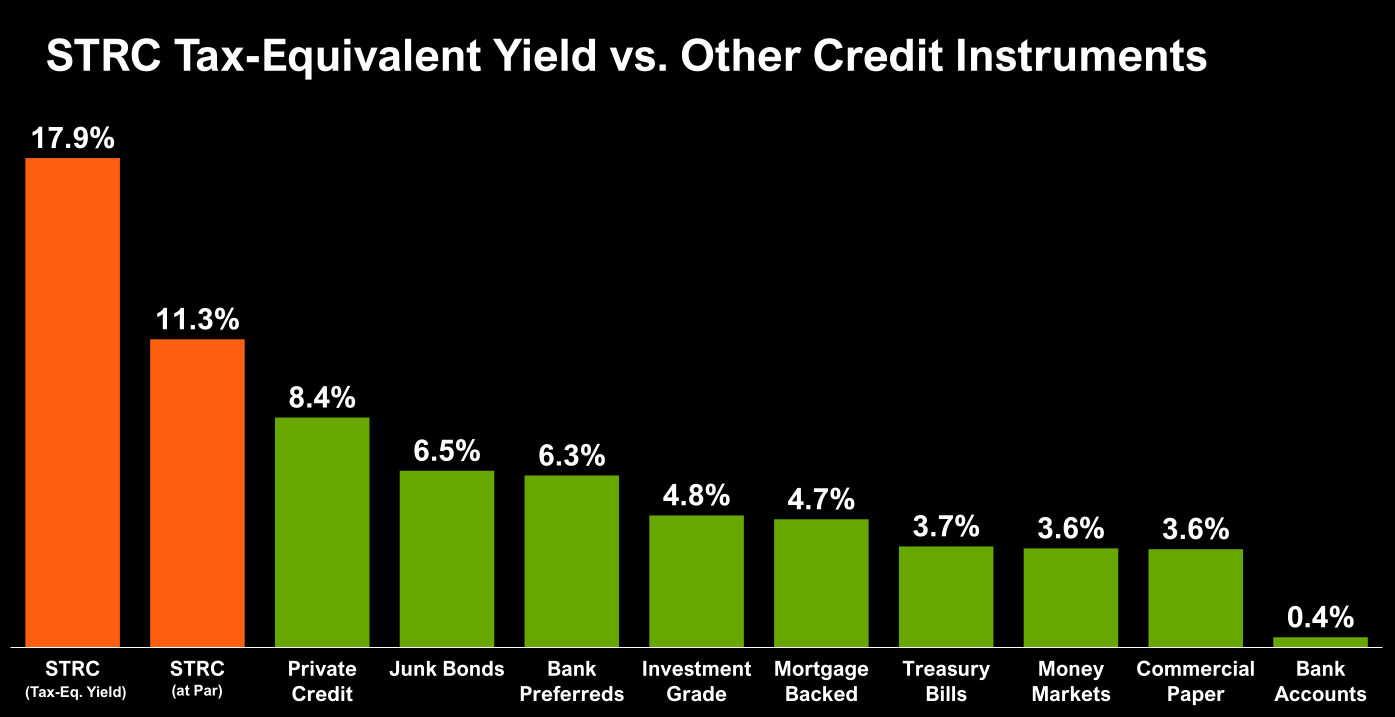
To achieve yields near 10%, many investors have turned to the private credit market—a $2 trillion industry dominated by asset management firms like BlackRock, Blackstone, and Blue Owl. These funds operate by lending money to lower-credit companies that are unable to secure traditional bank loans.
While the high interest rates are appealing, the underlying structure harbors significant risks for investors:
- Real Default Risks: Lending to unstable businesses inevitably leads to defaults. A stark example is a BlackRock-managed private fund that permanently lost its entire $25 million loan when the borrower, Infinite Cus Holdings, went bankrupt.
- Illiquidity and Trapped Capital: Unlike publicly traded stocks, private credit funds severely restrict when investors can cash out, typically allowing redemptions only four times a year. In times of market stress, management can arbitrarily halt these redemption requests completely.
- High Management Fees: Assessing the financial health and future prospects of dozens of separate small businesses requires extensive resources, and the cost is passed down to investors through high fees.
The Transparent Alternative: Digital Credit (STRC)
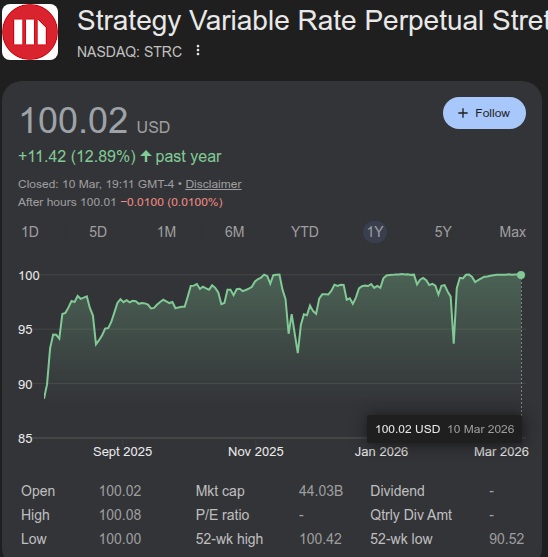
As the limitations of traditional private credit become apparent, digital credit products are emerging as a transparent alternative. A prime example is STRC, a preferred stock issued by Strategy.
Digital credit instruments like STRC fundamentally address the structural issues of private credit. Because they are backed by a single asset—Bitcoin—investors can buy and sell their positions daily with abundant liquidity. Furthermore, risk can be objectively calculated using transparent metrics like "BTC weighting" without the burden of complex analysis or management fees.
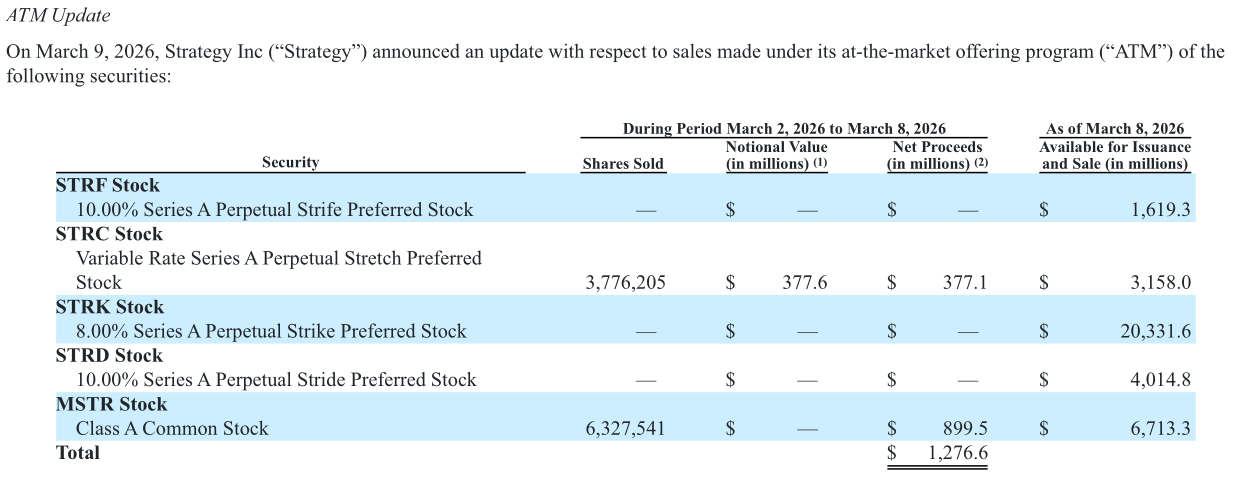
The market is already responding to this model. Strategy's STRC recently maintained a price above $100 for a week, and the company utilized it to purchase 5,315 Bitcoins in that same timeframe. To put this into perspective, only 3,150 new Bitcoins are mined globally each week.
The Core Metric: Is an 11.5% Yield Sustainable?
STRC offers an 11.5% interest rate. For this model to be sustainable, Bitcoin's value must grow at an annualized rate of at least 11.5%. Several current macroeconomic and institutional signals suggest this is a realistic trajectory:
- Institutional Integration: Morgan Stanley, with $6 trillion in assets under management, is currently awaiting SEC approval for its own Bitcoin ETF. Additionally, traditional US banks are preparing to offer Bitcoin custody and collateralized loans as they await the passage of the Clarity Act.
- Infrastructure Milestones: In a historic first, the crypto exchange Kraken was recently granted a master account for direct access to the Federal Reserve's FedWire payment network—a privilege previously reserved only for traditional Wall Street banks.
- Macroeconomic Pressures: The US government spent $6 billion in just the first week of the Iran war. Expected increases in fiscal spending and subsequent money printing are likely to act as catalysts for Bitcoin's value.
Looking Ahead
Currently, the entire market capitalization of Bitcoin is around $1.3 trillion, which is still dwarfed by the $2 trillion tied up in the US private credit market. Even a fractional shift of capital from traditional private credit into digital credit products—such as Strategy's STRC, Strive's SATA, or Metaplanet's MARS in Japan—will significantly impact the Bitcoin network.
For long-term investors, the calculation comes down to a simple comparison: Is it more probable that unknown, struggling companies will consistently survive while paying 10% interest, or that the Bitcoin network will maintain an average annual growth of 11.5%?. If the latter proves true, the transition toward digital credit is a trend worth watching closely.